
Our Music
Limbo dance/Kaiso/Calypso
The limbo dance and kaiso music also have significant roots in Guyana, where they form part of the nation’s rich cultural heritage. These elements were brought by the African slaves who were transported to the Caribbean, including to the Guiana colonies, during the transatlantic slave trade. Both the limbo and kaiso evolved in Guyana in much the same way they did in Trinidad, becoming key aspects of the country’s music and dance traditions.
The limbo dance has its origins in the Ibibio people of the Nigerian Delta, where it was performed by slaves as a test of flexibility and endurance. Participants would bend backward to pass under a bar, often set lower after each round, while the crowd chanted words of encouragement such as “kaiso”, which means “go forward” in the local dialect. This dance came to symbolize both physical strength and resilience in the face of adversity.
The term kaiso, originally associated with the limbo dance, became tied to a style of music in which slaves in the Caribbean would sing clever and often biting songs, mocking their oppressors. When these songs made their way to the Caribbean, they evolved into Calypso music, a genre that became synonymous with Trinidad and Tobago but also found a place in the musical culture of Guyana. Early kaiso songs were often full of social commentary, providing a platform for enslaved people to express their frustrations and critique their colonial masters.
By the early 20th century, Calypso music had gained prominence across the Caribbean, with Guyanese artists also making their mark. Performers such as Lord Kitchener, Mighty Sparrow, and others, who came from neighboring islands, influenced the development of local music scenes in Guyana. This genre was not only about fun but also about highlighting social issues, using humor, satire, and storytelling to comment on the struggles of everyday life.
The Calypso Monarch competition is an important part of the Guyanese festival calendar, particularly around Mashramani (Guyana’s Independence Day celebrations), where the music and performances continue to resonate as a powerful form of expression. While Trinidad and Tobago may be the most well-known hub for the development of Calypso, the influence of kaiso and limbo is strongly felt throughout the Caribbean, including Guyana, where these traditions remain integral to national identity and celebrations.
Today, Calypso is still alive in Guyana, celebrated in various festivals and gatherings, and continues to evolve. It remains a symbol of resilience, creativity, and the ongoing effort to address the social, cultural, and political concerns of the Guyanese people. Calypso’s influence is also seen in modern genres like soca and chutney, where the themes of community and resistance live on.
Soca
In Guyana, Soca music also enjoys a significant following, with the genre having found its place alongside other musical styles that reflect the country’s rich multicultural influences. The creation of Soca music is often attributed to Lord Shorty in Trinidad during the early 1970s, with the aim of revitalizing the declining popularity of Calypso music. By blending the traditional rhythms of Calypso (kaiso) with influences from funk, soul, cadence, and even chutney, Lord Shorty coined the term Soca as a fusion of the words “Soul” and “Calypso”. This new sound introduced faster-paced beats and energetic vocals, and its dynamic rhythm quickly became a sensation across the Caribbean.
While Soca music originated in Trinidad, its impact reached Guyana, where it merged with local traditions and influences, creating its own distinct expression in the musical culture of the country. The energetic rhythms of Soca soon began to dominate festivals, especially around the Mashramani celebrations (Guyana’s Independence Day) and other national events. The sound of Soca became a perfect match for the exuberant and vibrant celebrations that Guyana is known for, with songs encouraging unity, freedom, and joy.
In Guyana, the fusion of Soca, Calypso, and Chutney created a genre unique to the Caribbean’s diverse soundscape, with performances from local artists becoming a central feature of national festivities. Just as in Trinidad, Soca has evolved over time, and Guyanese artists have embraced this genre to produce their own hits, contributing to the region’s growing influence in the global Soca scene.
Although Guyana may not have an equivalent to Trinidad’s International Soca Monarch competition, the country’s Mashramani festivities offer a similar platform where Soca music thrives, drawing thousands of spectators and musicians alike. It is during such events that Guyanese Soca artists showcase their talents, celebrating the shared Caribbean spirit and rhythmic diversity.
Well-known Guyanese Soca artists have made their mark, contributing to the genre’s popularity, and Soca music remains an essential part of the Caribbean musical tradition. Today, international superstars like Machel Montano, Superblue, and Destra Garcia inspire local Guyanese artists, while newer talents continue to elevate the genre with a global reach. The sound of Soca is now celebrated worldwide, with its infectious energy and rhythmic beats creating an unmistakable connection between the Caribbean, including Guyana, and audiences around the globe.
Chutney
Guyana certainly has Chutney music as an important part of its musical culture, just like in other parts of the Caribbean, particularly in Trinidad and Tobago and Suriname. Guyana’s Indo-Caribbean population has a long tradition of performing and enjoying Chutney music, which has evolved alongside other genres to become a significant part of the country’s cultural identity.
In Guyana, Chutney music has its roots in the same historical experiences, particularly the indentured Indian workers who came to the country in the 19th and early 20th centuries. They brought with them traditional Indian folk and devotional music, which over time blended with local influences to create the vibrant genre of Chutney that we know today. The fusion of traditional Indian instruments like the dholak and tabla with Caribbean rhythms gave rise to a distinctive sound that has been embraced by Guyanese people of Indian descent.
Chutney music in Guyana also incorporates Soca, as it does in Trinidad, and the two genres have often been combined in a subgenre known as Chutney Soca. Just like in Trinidad, Chutney Soca blends the traditional rhythms of chutney with the high-energy beats of Soca, and has become especially popular during the Mashramani celebrations, Guyana’s version of Carnival.
Notable Guyanese Chutney Artists such as Sundar Popo, who hails from Trinidad but is widely loved in Guyana, and Rajesh Chandra and Nandini Ramnarine from Guyana, have contributed significantly to the popularity of Chutney music in the country. The music is especially prevalent during festivals such as Divali and Phagwah (Holi), where traditional music and dance are celebrated.
In Guyana, Chutney Soca Monarch competitions are not as prominent as in Trinidad, but Guyanese artists have still contributed to the wider Caribbean Chutney Soca scene. The genre is a vibrant and cherished part of Guyanese music and cultural celebrations, continuing to evolve and thrive among the Indo-Guyanese community, especially during key cultural events and national festivities.
Parang
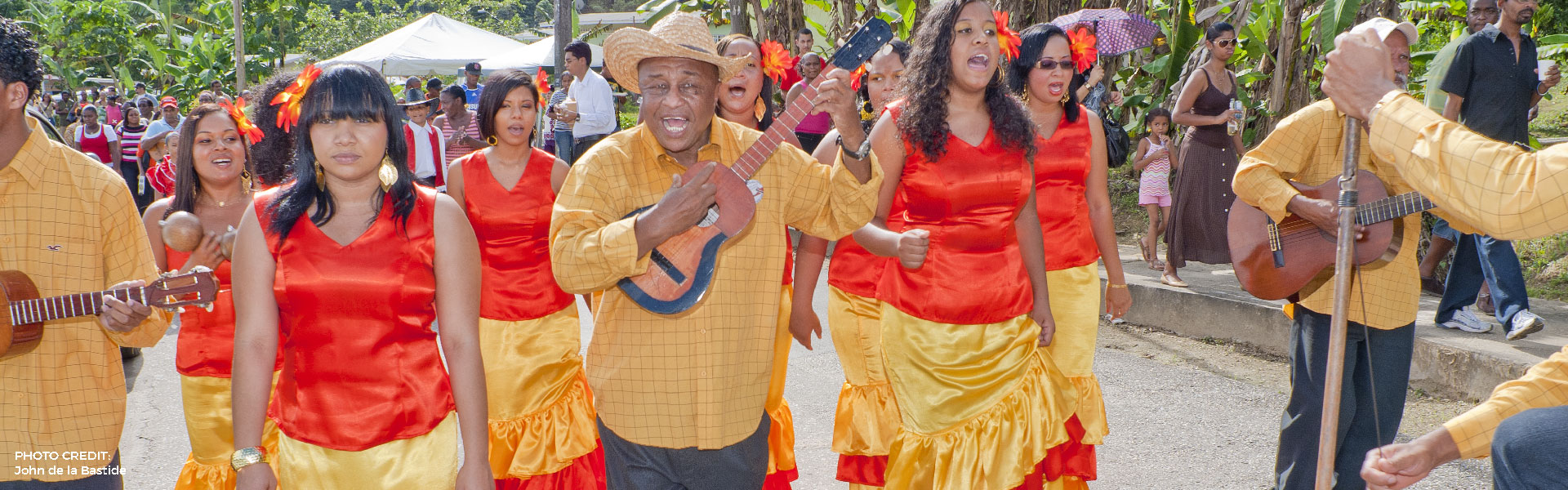
Yes, Parang music is an important part of Christmas celebrations in Guyana as well, particularly among the Indo-Guyanese population. Similar to Trinidad and Tobago, Parang has its roots in the Spanish colonial period and Venezuelan influences, but the music in Guyana has evolved with its own distinctive characteristics and local flair.
Parang in Guyana is also deeply connected with the Christmas season, where it is commonly performed at gatherings, parties, and other community events. There are several regional and traditional styles of Parang in Guyana, influenced by the various ethnic communities and their history in the country.
The instruments used in Guyanese Parang include the guitar, maracas, cuatro, mandolin, and box bass, similar to the instruments in Trinidad’s version of Parang. The music itself is often accompanied by traditional Spanish-language carols, and people gather in homes to share food, drinks, and holiday cheer.
In Guyana, Parang is particularly popular during Christmas and is commonly heard in communities that are known for their strong cultural ties to Venezuelan and Spanish traditions, such as Georgetown, Berbice, and the Upper Demerara regions. Parang in Guyana often includes a mix of Christmas and folk songs, celebrating the spirit of the season in a uniquely Guyanese way.
Guyanese Parang groups, much like their Trinidadian counterparts, perform and compete in various local events to showcase their musical talents, and they continue to preserve and promote the genre through local festivals and performances. Parang in Guyana is a cherished tradition, contributing to the country’s vibrant holiday celebrations and community spirit.