
National Instrument
Steelpan
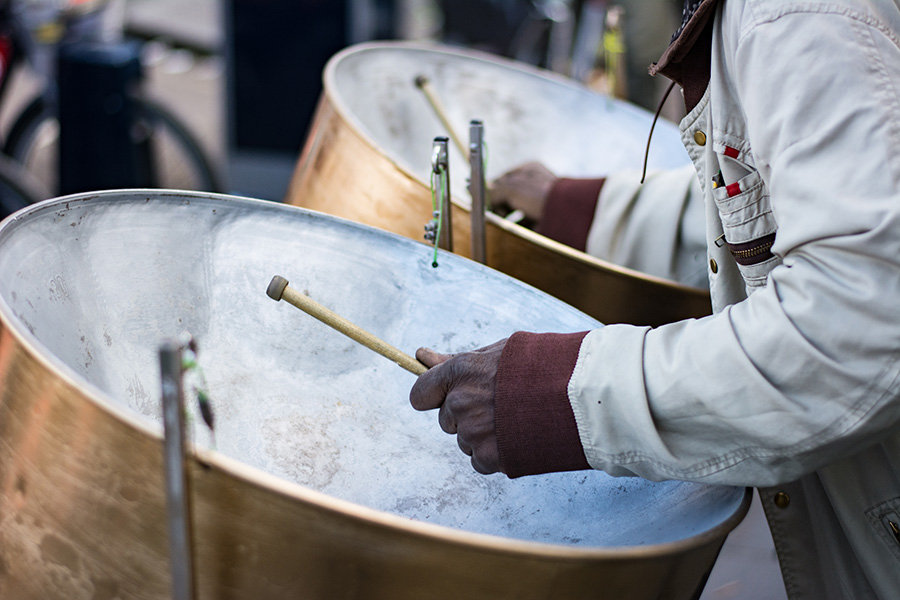
A member of the percussion family, the steelpan is Guyana’s national instrument, embodying a rich history of resilience and creativity.
The instrument’s origins trace back to the Caribbean, where early versions of the steelpan were developed in response to colonial bans on traditional drumming. Much like the development of the steelpan in Trinidad, Guyanese cultural innovators also sought to express themselves musically despite colonial restrictions. The roots of steelpan music lie in African traditions, where drumming played a vital role in communal expression and ceremonies.
During the 20th century, when drumming was prohibited, people in various parts of the Caribbean, including Guyana, sought alternative ways to create rhythm. In the hills of Georgetown and other rural areas, early versions of steelpans were crafted by repurposing materials like discarded oil drums, which were then hammered into concave shapes to produce different musical notes. The sound of these instruments gradually evolved, and by the mid-1900s, steelpans became a symbol of resistance and cultural pride.
Today, the steelpan remains a crucial part of Guyanese cultural expressions, particularly during Carnival and other celebratory events. Bands like the Golden Harmony Steel Orchestra and Guyanese Pan Groove continue to showcase the instrument’s rich history and versatility. The instrument, originally conceived in response to adversity, is now recognized and celebrated globally, representing both Guyana and the Caribbean’s legacy of creativity and resilience.